
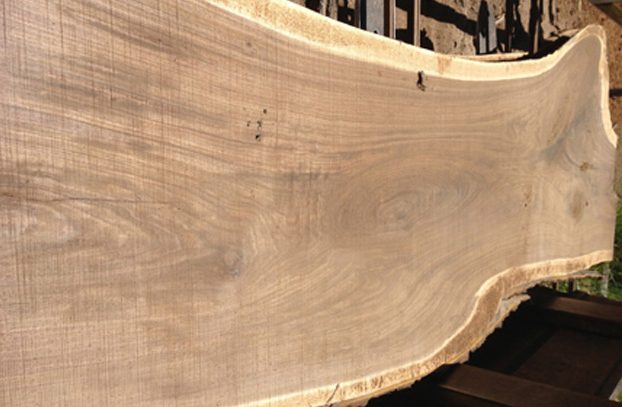
Live Edge Hardwood Slabs from Ohio
Ohio Timber Works offers live-edge hardwood slabs from quality Ohio timber for tables, countertops, mantels, shelving, and custom projects.
Quick Summary
- What this page covers: How hardwood slabs are selected, dried, and prepared for tables, bars, counters, benches, mantels, and stair components.
- Common requests: Live-edge slabs from Ohio in Walnut slabs and White Oak slabs, plus other regional species when available.
- Performance matters: For interior projects, hardwood used for furniture and millwork is commonly dried to about 6%–8% moisture content to reduce seasonal movement risk.
- How to buy smarter: Confirm moisture, check for stress and checking, and plan flattening/joinery before you design around a slab’s final dimensions.
Hardwood Slabs: Live-Edge vs. Dimensional
“Hardwood slabs” usually means wide, thick stock cut to preserve a continuous face from a single log. Some projects want the natural edge and organic silhouette of live-edge hardwood slabs. Others prefer a cleaner look with one or both sides straight-lined, while still keeping the wide, single-piece character that standard boards cannot match.
When Live-Edge Makes Sense
- Tabletops, bar tops, and conference tables where the edge line is part of the design.
- Benches and shelves where figure and width matter more than perfectly parallel edges.
- Statement pieces where knots, curl, and color contrast are desirable rather than defects.
When Dimensional Slab Stock Fits Better
- Built-ins, mantels, and counter runs that need a tight fit to walls or cabinets.
- Projects that require predictable joinery, square reference edges, or hidden fasteners.
- Installations where you want the wide-board look without a natural edge.
What “Kiln-Dried Hardwood Slabs” Means in Practice
Drying is not just a box to check. It impacts stability, glue performance, finishing, and how likely a slab is to cup, check, or twist as it acclimates to your space. In wood science references used by the U.S. Forest Service, hardwood for interior furniture, flooring, cabinets, and millwork is typically dried to 6%–8% moisture content, because interior conditions demand tighter control than outdoor use.
If you are comparing kiln-dried hardwood slabs to air-dried stock, keep one practical point in mind: a thick slab can look “dry” on the surface while still holding more moisture internally. That is why moisture verification and adequate equalization time matter before flattening or cutting joinery.
For more on drying and how moisture relates to performance, see our overview on Kiln-Dried Lumber and the technical reference linked in the Resources section below.
Common Sizes, Prep Options, and What to Specify
Slab inventory varies by log, but most orders fall into a few repeatable specs. If you tell us your design target and constraints up front, it is easier to match you with a slab that finishes at the size you actually need.
| Spec You Provide | Why It Matters | Typical Decision Points |
|---|---|---|
| Finished Length | Checks, end splits, and layout can reduce usable length. | Target finished length plus trim allowance. |
| Width Range | Wide slabs are log-limited; figure and sapwood vary across the face. | Single-slab vs. bookmatched pair vs. glue-up. |
| Thickness | Thicker slabs move slower and require more drying time. | Common builds include 2″+ for tables and bars, thinner for shelving. |
| Edge Treatment | Live-edge keeps the natural silhouette; straight-line improves fit. | Live-edge both sides, or one straight-line reference edge. |
| Moisture Target | Interior installs generally require lower MC than exterior use. | Confirm meter readings and allow acclimation before final flattening. |
| Character Level | Knots, worm, mineral, and sapwood affect yield and appearance. | “Clean” zones vs. “character” zones, plus where defects are acceptable. |
For species-specific notes that affect workability and appearance, use our Lumber Fact Sheet.
Featured Species: Walnut and White Oak Slabs
Two of the most requested categories we see are Walnut slabs and White Oak slabs. Each behaves differently as a finished surface and each has a distinct look, even before finishing.
Walnut Slabs
- Why people choose it: rich heartwood color, strong grain definition, and a premium feel for statement tops.
- Design reality: sapwood contrast can be a feature or something you plan around, depending on the look you want.
- Typical uses: tables, counters, desktops, benches, and bar tops where warmth and figure matter.
White Oak Slabs
- Why people choose it: classic grain, strong wear performance, and a look that fits modern or traditional interiors.
- Finish flexibility: works across a wide range of stain and topcoat styles, from natural to darker tones.
- Typical uses: bar tops, tables, mantels, treads, and large built-in surfaces.
If you are deciding between the two, it often comes down to your target color palette, the character you want (clean vs. rustic), and the size you need. Share those constraints and we can narrow options quickly.
Buying Checklist for Live-Edge Slabs from Ohio
- Start with the end use: tabletop, bar top, counter, mantel, bench, or stair component all have different thickness and stability priorities.
- Confirm moisture readings: especially for interior installs and for thicker stock.
- Plan for flattening: build in thickness margin for surfacing and final flattening after acclimation.
- Look for stress indicators: surface checking, end splits, and twist often show up early if a slab is going to be challenging.
- Decide on edge strategy: full live-edge, one straight-line reference edge, or fully squared for a cleaner build.
If your project needs machining support beyond surfacing, see Custom Milling.
Ohio Sourcing and Supply: A Practical Note on Price Trends
Even when you are buying slabs for a finished project, regional hardwood pricing still matters because it influences which species are most available and how quickly inventory moves. Ohio State University’s Ohio Timber Price Report publishes repeated survey snapshots of sawlog pricing across the state and regions.
Recent Ohio Sawlog Price Medians: Walnut vs. White Oak
Based on Ohio Timber Price Report survey medians, Doyle scale ($/MBF), statewide.
Ohio Timber Price Report statewide median sawlog prices (Doyle scale, $/MBF) show how species markets can shift across survey periods, influencing premium log and slab availability.
Get Current Inventory and a Straight Answer on Fit
Ohio Timber Works operates in Ohio and surrounding regions. We specialize in timber harvesting, hardwood products, timber buying, and log brokering. If you are sourcing Ohio hardwood slabs for a specific build, send the specs first and we will respond with what is realistically available now.
What to Send
- Species preferences (Walnut, White Oak, or alternatives)
- Target finished dimensions and how the slab will be used
- Live-edge or straight-line preference
- Delivery or pickup timing
Call: 937-451-8905
Frequently Asked Questions
What Is the Difference Between Live-Edge Slabs and Dimensional Slab Stock?
What Moisture Content Should Kiln-Dried Hardwood Slabs Be for Interior Projects?
Do You Carry Walnut Slabs and White Oak Slabs Regularly?
How Thick Should a Hardwood Slab Be for a Tabletop or Bar Top?
Can You Straight-Line One Edge So the Slab Fits Against a Wall?
How Do I Avoid Cupping or Checking After I Buy a Slab?
Do You Offer Machining or Custom Milling for Slab Projects?