
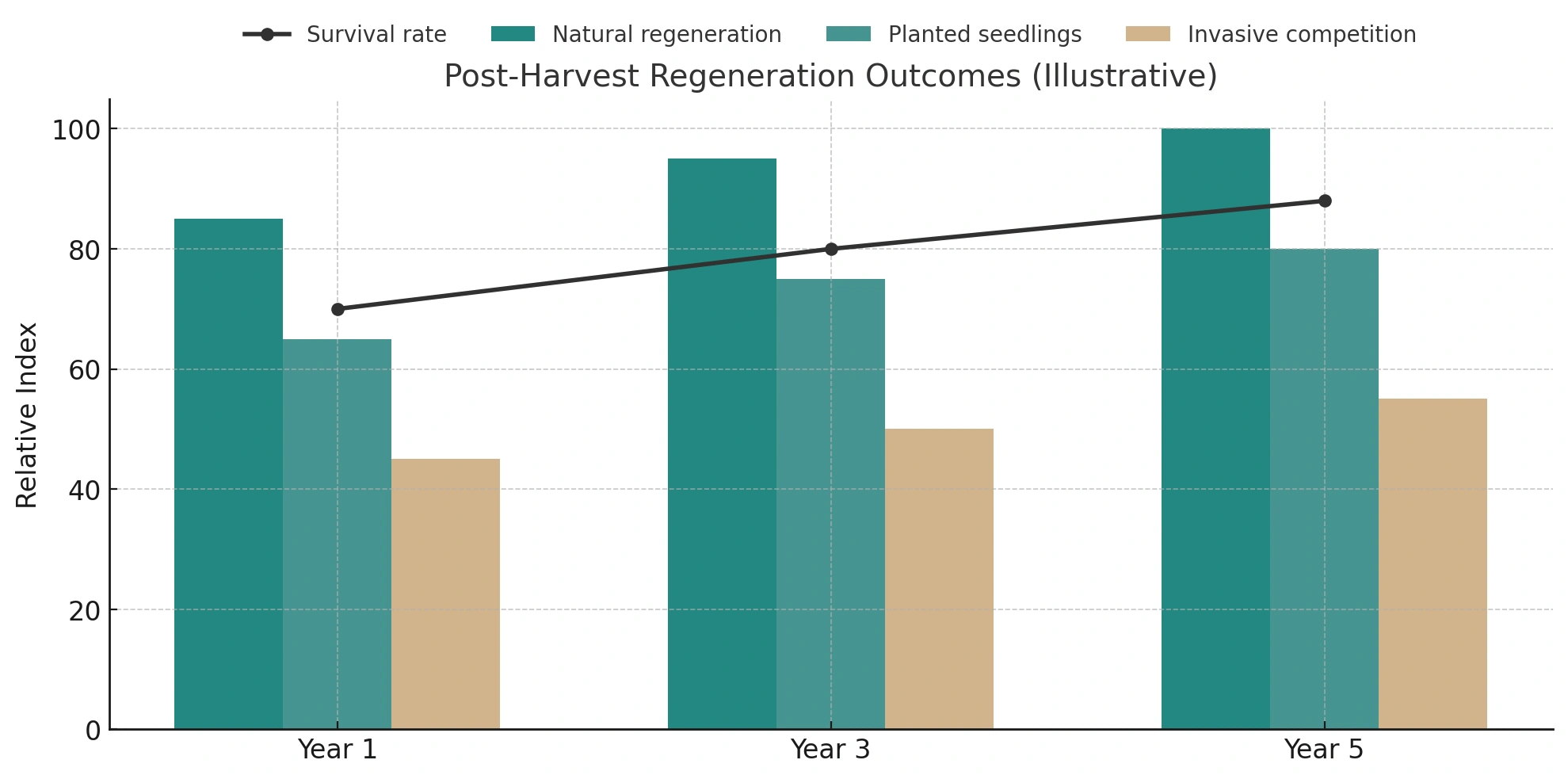
When planning reforestation, the key is matching the regeneration method to the actual conditions on the ground. Areas with strong seed sources, good sunlight, and minimal invasive pressure often respond well to natural regeneration with little intervention. But places where competing vegetation is dense, desirable species are missing, or soil was heavily disturbed may benefit from targeted planting to steer the stand back toward high-value hardwoods. By evaluating each section of a property after harvest, landowners can combine natural regeneration and supplemental planting in a way that strengthens long-term forest health and maintains the hardwood species most valued in Ohio.
Why Reforestation Matters After Logging
A well-planned harvest removes mature, high-value trees and creates openings for the next generation of hardwoods. Reforestation ties the whole process together. Without a plan, invasive plants, undesired species, or repeated browsing pressure can push a stand away from quality hardwoods and wildlife habitat.
Thoughtful reforestation after logging can help landowners:
- Maintain or increase future timber value in walnut, white oak, maple, and other desirable hardwoods.
- Improve wildlife habitat by keeping a mix of age classes, cover, and food sources in the woods.
- Protect soil and water by re-establishing deep-rooted trees and ground cover on disturbed areas.
- Capture more of the long-term benefits of a harvest instead of treating it as a one-time event.
In many Ohio hardwood woodlands, natural regeneration can do much of the work after a harvest. When desirable seed sources are present and competing pressure is limited, young hardwoods may return on their own as sunlight reaches the forest floor.
“Regeneration is the process of replacing older trees with young trees and is essential for sustaining Ohio’s forests.”
“Regeneration is the process of replacing older trees with young trees and is essential for sustaining Ohio’s forests.”
Source: Ohio State University Extension3
In other situations, however, tree planting can be an important part of reforestation after timber harvest—especially where regeneration is thin, invasive plants are aggressive, or browsing pressure threatens the next stand.
Planting hardwood seedlings can help re-establish species such as walnut, white oak, maple, and other trees suited to the site and the landowner’s long-term goals.
Used selectively, planting is not a replacement for sound forest regeneration planning, but a practical tool for strengthening hardwood regeneration where natural recovery alone may not be enough.
Ohio Timber Works focuses on regeneration that fits the site: using natural regeneration where it is likely to succeed, and recommending tree planting where it adds clear value for the landowner.3
How Ohio Timber Works Helps with Reforestation After Timber Harvest
After a harvest, we help you evaluate regeneration and identify problem areas. Together we choose a realistic path forward. This may include natural recovery, planting key species, or targeted site work to improve survival.
1. Post-Harvest Woodland Walk-Through
2. Regeneration and Planting Plan
3. Site Preparation
4. Tree Planting and Protection
5. Follow-Up Checks
Programs and Support for Reforestation
Private woodland owners in Ohio may be eligible for technical or financial assistance for reforestation through federal and state conservation programs. Agencies such as the USDA Natural Resources Conservation Service (NRCS) and the Ohio Division of Forestry support practices like tree planting, natural regeneration, and woodland improvement for long-term forest health.4
These programs change over time and often focus on specific resource concerns such as soil health, water quality, or wildlife habitat. Ohio Timber Works does not administer these programs, but we encourage landowners to explore them and can help you understand how a reforestation project on your property might align with current offerings.
For questions about how reforestation fits with your recent or planned timber harvest, contact the team at Ohio Timber Works first. We can discuss your woods, your goals, and the practical steps to get young trees established and growing.
To learn more about how harvest decisions influence future forests, you may also want to review our Logging Overview page, which explains how we plan selective harvests with regeneration in mind.
Ready to Talk About Reforesting Your Woods?
If you have recently harvested timber—or are planning a harvest and want to be sure the next forest is even better—Ohio Timber Works can help you outline and carry out a reforestation plan.
Call Ohio Timber Works at 937-451-8905 or use our contact form to request a visit.
References
- Ohio State University Extension – Harvesting and Regeneration Methods for Ohio Forests
- USDA Forest Service – Seeding and Planting Hardwoods (Central Hardwood Notes)
- Purdue Extension – Planting Hardwood Seedlings in the Central Hardwood Region
- USDA NRCS – Programs & Initiatives Supporting Reforestation and Woodland Improvement